
From Prototype to Reality: How 3D Printing is Transforming Product Development
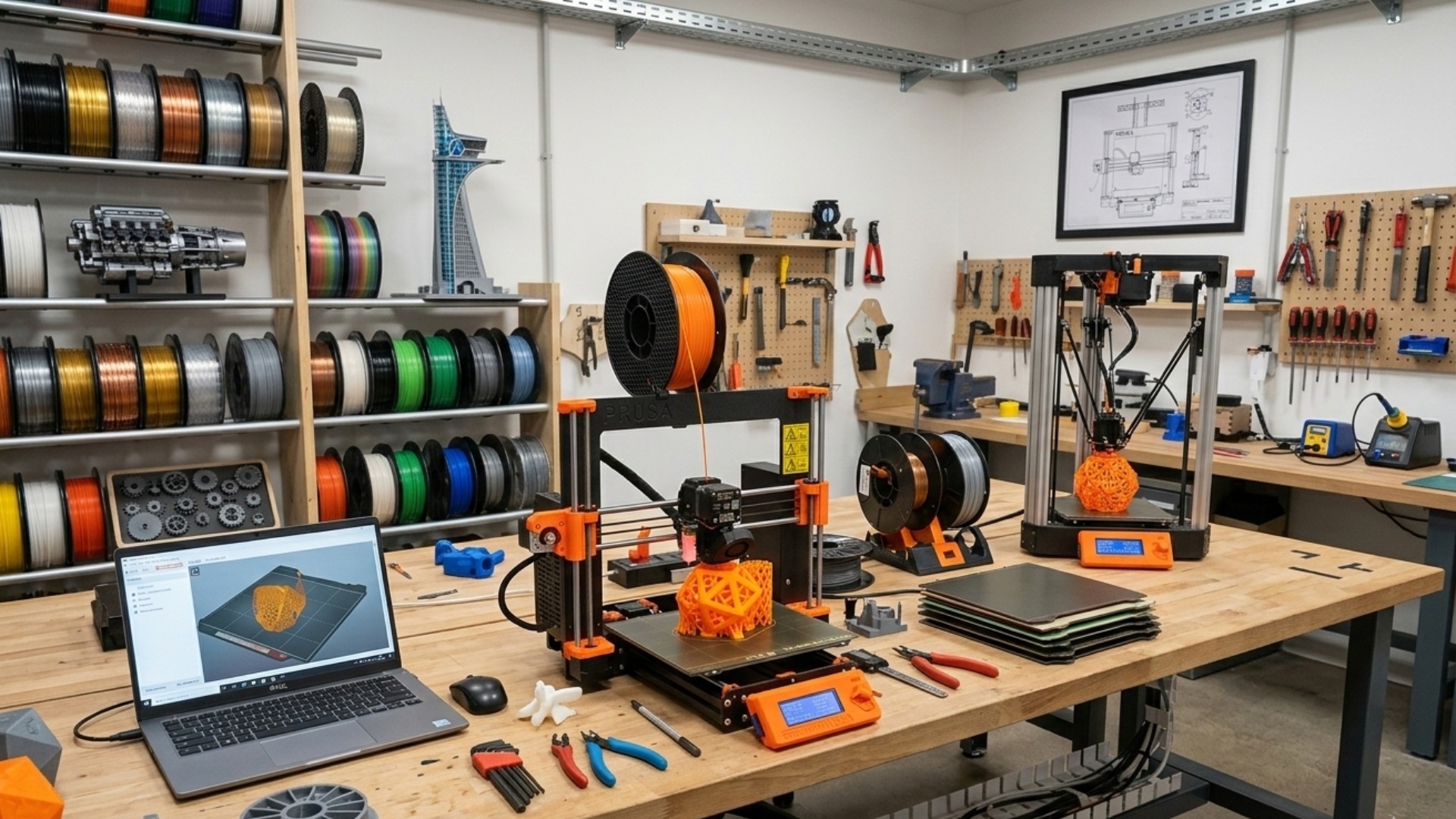
3D printing has become a major breakthrough in the fast-changing world of product development. This innovative technology is changing the way businesses turn their ideas into real products by quickly and cost-effectively creating physical prototypes from digital designs. Whether it’s Aluminum 3D Printing for strong industrial parts or using plastic for prototyping, companies are using advanced techniques to improve performance and make products more durable. The old days of waiting weeks or even months for a prototype are over. Now, designers can test and adjust their ideas in just a few hours with the help of 3D Printing Aluminum and other modern manufacturing methods.
This article explores how 3D printing is altering the product development process. We will look at its benefits, such as faster time to market, greater design freedom, and reduced costs. We will also discuss real businesses that have used this technology to gain an edge in the market. For designers, engineers, and business owners, understanding how 3D printing influences product creation is essential to stay competitive in today’s rapidly changing market, especially with the increasing use of Aluminum 3D Printing in Malaysia across many industries.
Discover how 3D printing can transform your product development process by experiencing its power firsthand. Embrace this advanced technology and see how your ideas can become reality quickly with the support of a trustworthy 3D Printing Company in Malaysia that understands modern manufacturing needs.
Table of Contents:
-
-
- Benefits of Using 3D Printing in Product Development
- Case Studies Showcasing Successful Product Development Using 3D Printing
- The Process of Turning a Prototype Into a Final Product Using 3D Printing
- Key Considerations When Using 3D Printing in Product Development
- Tools and Software for 3D Printing in Product Development
- The Future of 3D Printing in Product Development
- Challenges and Limitations of Using 3D Printing in Product Development
- Industries and Sectors Benefiting From 3D Printing in Product Development
- The Transformative Power of 3D Printing in Product Development
-
Benefits of Using 3D Printing in Product Development
3D printing offers numerous benefits for creating products. One major advantage is that it significantly reduces the time required to bring a product to the market. In traditional manufacturing, molds and tools are needed, which can take a long time to produce. With 3D printing, designers can bypass these steps and move directly from a digital design to a physical prototype. This allows businesses to launch their products more quickly, offering a competitive advantage. When working with a trusted 3D Printing Service Near Me, the turnaround time is further improved.
Another benefit is greater design flexibility. In the past, designers were limited by the constraints of traditional manufacturing. However, 3D printing makes it easy to create complex shapes and intricate details. Designers now have more options and can produce items that were previously impossible. 3D printing provides exceptional freedom in creating lightweight structures, detailed patterns, and unique components when using professional 3D Printing Services Malaysia.
Cost savings are also a key advantage of 3D printing. Traditional methods often require expensive tooling, which can be a challenge for small businesses or startups. With 3D printing, there is no need for tooling because the product is built layer by layer from a digital design. This makes it a cost-effective solution for product development, as it eliminates the upfront costs of tooling. It is especially beneficial for companies that need visual presentations or architectural prototypes, as Scale Model 3D Printing can produce accurate and affordable models.
Case Studies Showcasing Successful Product Development Using 3D Printing
Many companies have already changed their product development processes using 3D printing. Adidas is a notable example. The brand used 3D printing to create the Futurecraft 4D sneakers. By 3D printing the midsoles, Adidas could customize the fit and cushioning for each wearer. This level of customization would not have been possible with traditional methods. The success of the Futurecraft 4D shoes showed strong demand for personalized products. Now, Adidas offers a range of mass-produced running shoes with lightweight Carbon 3D-printed insoles.
Local Motors, an American car manufacturer, is another interesting case. The company created the Strati, the first-ever 3D printed car, using 3D printing technology. By using 3D printing for the car’s body and chassis, Local Motors significantly reduced the time and cost of traditional car manufacturing. This innovative approach is not only cost-effective but also eco-friendly as it minimizes material waste.
The Process of Turning a Prototype Into a Final Product Using 3D Printing
Using 3D printing to turn a prototype into a finished product involves several steps. First, a digital design is created using computer-aided design (CAD) software. This design is then converted into a file type like STL or OBJ that is compatible with 3D printing. The file is sent to a 3D printer, which builds the product layer by layer using additive manufacturing.
During the printing process, the 3D printer deposits material, typically plastic or resin, in precise areas as per the digital design. As each layer is added, the product gradually takes shape. After printing is complete, any support structures used during printing are removed. The product is then prepared for post-processing, which may include painting, sanding, or polishing to achieve the desired finish.
Key Considerations When Using 3D Printing in Product Development
Although 3D printing has many advantages, there are important considerations when incorporating it into product development. Choosing the right materials is essential as different materials have varying strengths, flexibility, and heat resistance. It is important to select a material that is suitable for the intended use of the product. For example, a heat-resistant material should be used if the product needs to withstand high temperatures.
The size and capabilities of the 3D printer are also important factors. The maximum size of the product that can be printed depends on the printer’s build volume. The level of detail that can be achieved also depends on the printer’s precision and resolution. It is crucial to choose a printer that meets the specific requirements of the project.
Tools and Software for 3D Printing in Product Development
A variety of tools and software are available to fully utilize 3D printing in product development. CAD software is used for creating and modifying digital designs. Popular CAD programs include AutoCAD, SolidWorks, and Fusion 360. These tools offer a range of features and functionalities to make the design process more efficient.
In addition to CAD software, slicer software is used to prepare the design file for 3D printing. Slicer software converts the digital design into instructions that the 3D printer can understand. This involves determining the necessary support structures, print speed, and layer height. Popular slicer software options include PrusaSlicer, Simplify3D, and Ultimaker Cura.
The Future of 3D Printing in Product Development
As technology continues to advance, the future of 3D printing in product development looks promising. One area of progress is the use of advanced materials. Researchers are exploring the use of materials with improved qualities, such as greater strength or conductivity. This opens up new possibilities for creating products with special features.
Another growing area is bioprinting, which involves using 3D printing technology to create living tissues and organs. Although bioprinting is still in its early stages, it has the potential to revolutionize healthcare by enabling the creation of patient-specific implants and organs, thus reducing the need for organ transplants.
Challenges and Limitations of Using 3D Printing in Product Development
Although 3D printing offers many benefits, it also has some disadvantages. One challenge is the limited range of materials that can be used in the printing process. While there are several options available, they may not be suitable for all purposes. For example, some materials might not have the required strength or ability to withstand high temperatures for certain applications.
Another limitation is the size of the objects that can be created. Most desktop 3D printers have a fixed build volume, which restricts the size of the items they can produce. As a result, large-scale manufacturing using 3D printing is still a challenge due to the need for specialized equipment and infrastructure.
Industries and Sectors Benefiting From 3D Printing in Product Development
Despite these challenges, 3D printing is being widely used across various industries. In aerospace, it is helping to create lightweight parts that improve fuel efficiency and performance. In healthcare, it is transforming the production of implants, prosthetics, and medical devices by enabling customized solutions tailored to individual patients.
The automotive industry is also benefiting from 3D printing, as it allows for faster prototyping and customization of parts. Robotics manufacturers, in particular, use 3D printing to produce small, complex, and lightweight components in low volumes. The jewelry industry is using the technology to craft intricate and personalized designs, while the fashion sector has also embraced 3D printing to create unique clothing and accessories.
The Transformative Power of 3D Printing in Product Development
In summary, 3D printing has significantly changed how new products are developed by offering faster time-to-market, greater design flexibility, and reduced costs.
We have seen how businesses are using this technology to gain a competitive edge through real-world examples.
Looking ahead, the future of 3D printing in product development seems promising, despite the current limitations and challenges. As technology continues to advance, we can expect improvements in materials, processes, and applications.
To stay competitive in today’s fast-paced market, product development should incorporate 3D printing. By using this innovative technology, businesses can bring their ideas to life more quickly than ever before, fundamentally changing how products are introduced to the market.
If you are looking for dependable and high-quality 3D printing solutions, our team is here to help your project from the initial concept through to completion.
Reach out to our experts today to discuss your needs and discover how our expertise can help turn your ideas into reality.