
5 Quick Hacks to Speed Up Your Model Kit Assembly
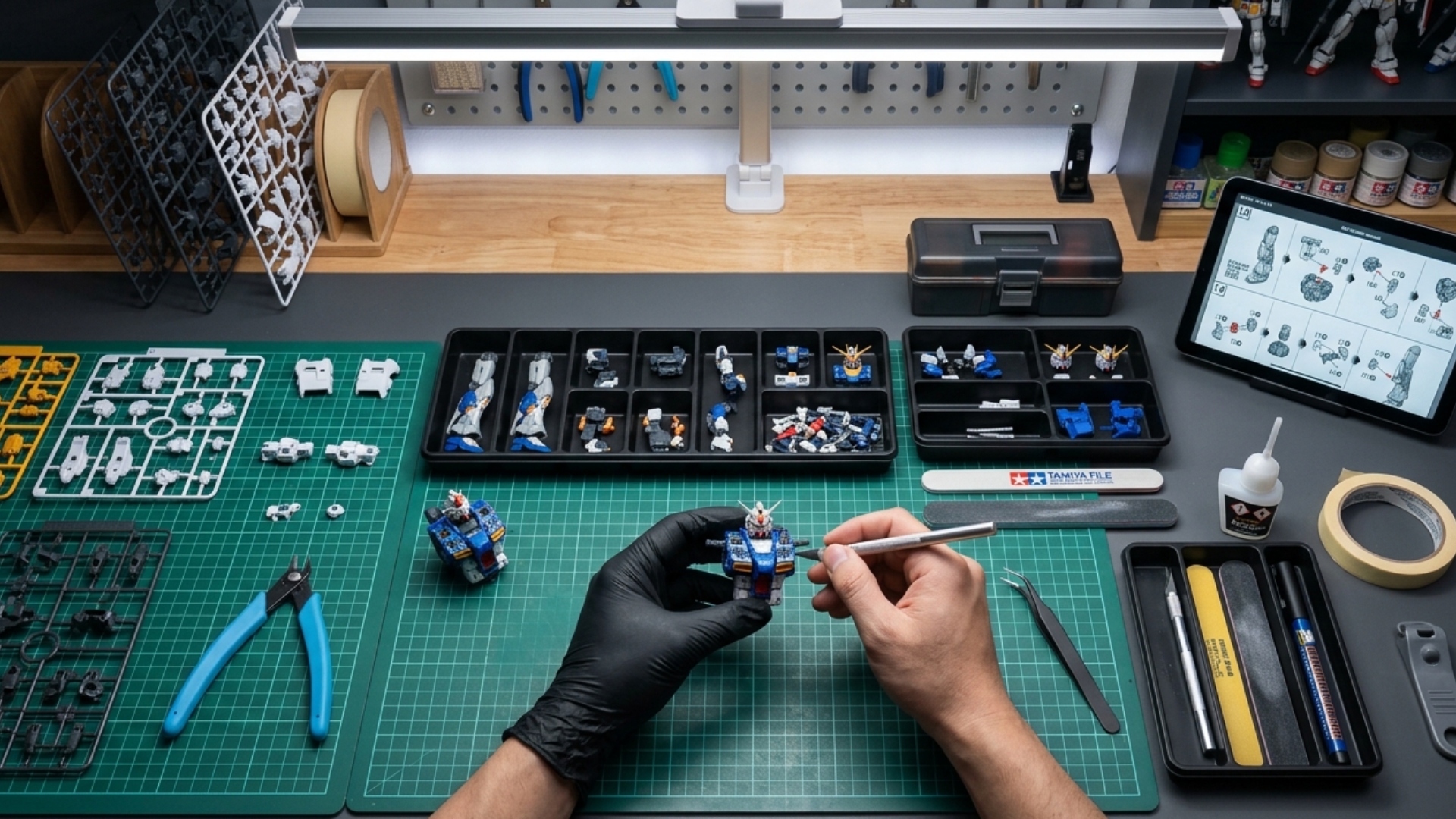
From smarter prep work to tool shortcuts that actually work, these tricks’ll serve you well whether you’re putting together a ripper scale car kit, a military plane, or a fancy diorama. We’ve also included links to the essential gear and kits from Hearns Hobbies that’ll take your builds from slow and frustrating to fast and bloomin’ satisfying.
What if working less could mean getting more done? Dive in – see how things shift when effort steps aside.
Table of Contents:
Five Quick Modeling Shortcuts
Test Fit Parts First
Ever been halfway through a build and realised somethings not quite right? Proper annoying, innit? That’s why Scaled Model Assembly in Malaysia are an absolute game-changer for speeding up your modelling. Before you go grabbing the glue tube, take a mo to test-fit your parts together. This simple trick helps you spot any dodgy alignment issues, parts that don’t quite fit, or awkward joins well before you’ve committed yourself with adhesive.
A bit of early testing saves you hours of painful sanding and re-gluing later on. Trust me, your future self will be thanking you when you’re not having to chip apart cemented sections cause they didn’t line up proper!
This technique is especially handy with complex builds like aircraft kits or armoured vehicles, where your internal bits can become impossible to reach once you’ve sealed everything up. Not being able to fix something you can see but can’t reach is a special kind of frustration you don’t need in your life.
Model kit pre-assembly
Quick Dry Fit Tips
1. Use masking tape to temporarily hold sections together while you check alignments
2. Pictures snapped when dry fitting works right stick around for the real build. Later on, those shots help keep things lined up just so. A quick look back means fewer mistakes going forward. 3.When parts go together for good, you’ve got proof it can happen. Seeing it once makes doing it again much smoother
4. For transparent parts, test the fit before removing any protective film
5. Check moving parts (like tank turrets or aircraft landing gear) function properly before gluing
Use Fast-Setting Adhesives
If you’re still using old-school slow-drying glue, ya might as well be watching paint dry (literally). Swapping to fast-setting plastic cement or CA glue can literally halve your assembly time. These sticky miracles form solid bonds within seconds, so you can get cracking on the next step without hanging about for hours waiting for things to set.
Thirty minutes or more – sometimes even hours – that is how long regular glues take to hold firm. Yet some strong quick-dry pastes set solid before one minute passes. One moment you are waiting, the next you are moving forward. Finish what you start by Saturday, not months later. The clock shifts when speed meets trust.
A small squeeze of glue accelerator can do the job fast when CA needs to grab right away. Sudden fixes on stubborn spots go smoother this way. Got gaps that refuse to sit still? That little bottle steps in quiet and sure.
Different adhesives work better for different materials, so make sure you’ve got the right ones in your toolkit:
1. Plastic cement – Perfect for styrene plastic parts
2. CA glue (superglue) – Great for mixed materials and quick fixes
3. PVA glue – Ideal for wood and paper elements in dioramas
4. Clear parts cement – Specially formulated for windows and transparent sections
A few top choices live inside our Scale Model Builders tools lineup, every item built for accuracy along with quick results. Just a small bit is enough – going heavy on adhesive means extra cleanup later, turning your shortcut into a longer chore instead.
Batch Sanding and Cutting
Nothing slows down a build like having to constantly switch between prepping different parts. Instead of the painful one-by-one approach, try grouping similar components and processing them together. Batch-cut all your sprue connections, then sand and trim the lot at once using quality cutting tools and sanding supplies.
Truth is, tossing some workshop logic onto your desk makes things run smoother. Honestly? It actually does help get more done.
Creating a Batch Processing System
1. Remove all similar parts from sprues (like all wheels, all engine parts, etc.)
2. Group them in small containers by type
3. Process each group with the same techniques before moving on
4. Use a sanding station with multiple grit options ready to go
Build in Sub-Assemblies
You wouldn’t try to eat a whole pizza in one go (well, maybe you would, no judgement), so why try to build your entire Scale Model Building in one linear sequence? Think modular! By breaking your project into logical sub-assemblies – like cockpit, fuselage, wings, or turret – you can paint and detail each section more efficiently.
Working with sub-assemblies has stacks of advantages:
Once built, some spots become unreachable – yet you can still get to them before assembly finishes
Different people can work on different sections if you’re building with mates
You can take breaks between completing sections without losing your place
Painting becomes tons easier with improved access to detailed areas
When things go sideways, just fix the tiny piece that broke – leave the rest alone
Sub-assembly work
Start small when diving into Model Building Malaysia – tweezers matter, especially ones that grip without slipping. Care shows up in how you move tiny pieces, which is where beginner kits shine by keeping things slow and steady through fewer parts. Each step builds the rhythm needed before jumping into complex builds.
Prime Using Spray Paint
Truth is, wrestling with an airbrush setup eats up minutes you could spend building. Skip the fuss – opt for a trusted aerosol primer. These pressurized cans lay down smooth layers fast, then harden quicker than most expect. Ideal when your workspace doubles as a closet, or fresh air flow feels like a myth. No compressor noise. Just steady results between shaky hands and tight deadlines.
Minutes tick by while others wrestle cans. This way? Half the wait, just like that. Skip the stirring, skip the scrubbing tools afterward. No clogs ever slow you down. Rattle the bottle, hit the surface, walk away – done before tea boils. Brushwork fuss vanishes into thin air.
They’re a brilliant match for kits in our plastic kits collection or beginner range, and they help eliminate those annoying bottlenecks in the painting phase.
Pro Tips: Use light, sweeping passes about 15 cm from the surface to avoid pooling and overspray. And always prime in a well-ventilated area or outdoors on a still day – your lungs will thank ya!
Rattle Can Primer Benefits:
1. No setup or cleanup time
2. Even, consistent coverage
3. Quick drying times (usually 15-30 minutes to handle)
4. Offered in multiple shades to suit distinct looks
5. Perfect for batch priming multiple kits or parts
Most common modelling materials take spray primers brilliantly, including plastic, resin, and even metal kits. Just make sure you’ve thoroughly cleaned your parts with a gentle soap and water rinse before priming to remove any mould release agents or finger oils.
For really speedy builds, you can even use coloured primers that match your final colour scheme, potentially eliminating an entire painting step for certain sections of your model. Our paint collection includes options for every type of project you might tackle.
Frequently Asked Questions
1.Which modelling hack saves the most time?
It’s gotta be the fast-setting adhesives, hands down. Swapping your old glue for quality CA glue or quick-setting cement cuts your waiting time from hours to mere seconds. When you’re no longer sitting around twiddling your thumbs waiting for joins to set, you’ll knock hours off your total build time. Check out our plastic cement collection for some ripper options that’ll speed things up proper.
2. Do I really need to do dry fits if the instructions seem clear?
Exactly – it happens more than you’d think. Top-tier model sets sometimes include pieces that refuse to align properly. A quick test assembly takes little time, yet prevents long headaches later when glued sections won’t sit flush. Mistakes locked in with adhesive are tough to undo. That reality hits hardest with detailed plane models, where hidden spots vanish behind closed shells.
3. Maybe spray cans work for the last coat, not only prep layers?
Absolutely! Spray cans are brilliant for base colours and even some metallic finishes. They’re particularly handy for larger models like 1/24 scale cars where you need consistent coverage over big panels.
Just remember to:
– Build up colour with multiple light coats rather than one heavy spray
– Wait a bit before adding more paint – fifteen to thirty minutes should do. Each layer needs space in time, like breaths between words
– Spray in a controlled environment away from dust and bugs
– Mask off areas you don’t want painted with quality masking tape
– Start strong by sealing it with one of our top-clear finishes. That extra layer comes from the paint range. It holds up better over time. Finish off right when you choose protection that lasts.
4. What’s the best way to organise sub-assemblies to avoid losing bits?
Losing tiny parts is a proper nightmare, so get yourself sorted with a decent organisation system. Egg cartons work a treat for keeping sub-assemblies separate, or grab some small plastic containers with dividers. Label each section with masking tape, and for super small bits like screws or antenna parts, try sticking them to a strip of double-sided tape on your workbench temporarily. Our 3D Scale Model Maker tools section has some good storage options to keep everything neat as a pin while you work.
Conclusion
Here’s the thing – five super-easy tricks can shift how you build models, turning what eats up weekends into something smooth enough to finish with minutes left for a drink and a good look at what you made. Not guesses or ideas tossed around online, but real moves used by people who take modelling seriously, again and again.
Remember, the goal isn’t to rush your build, but to eliminate those frustrating bottlenecks that kill your momentum and make the hobby feel like a chore. Whether you’re putting together your first starter kit or you’re a seasoned pro tackling a complex aircraft model, these shortcuts will help you build smarter, not harder.
Final Thoughts
Building something small can feel good even before it is done. Not every shortcut means doing less work – sometimes it simply makes moments at the table better. Pick up those clippers now, sort the tiny parts, begin fitting pieces together slowly. That box watching you from the corner will not assemble overnight – but using smarter ways might surprise how fast glue dries by morning. Get in contact with us if your looking for a Building Scale Model Company.