
What Is Rapid Scan And How Does The 3D Process Work?
The part is on the table. The engineer needs surface data before the next change. The designer wants color texture. The quality team wants to be sure that the prototype matches the model. Hours of setting up, targeting, and cleaning up can come between any of these decisions and the final decision.
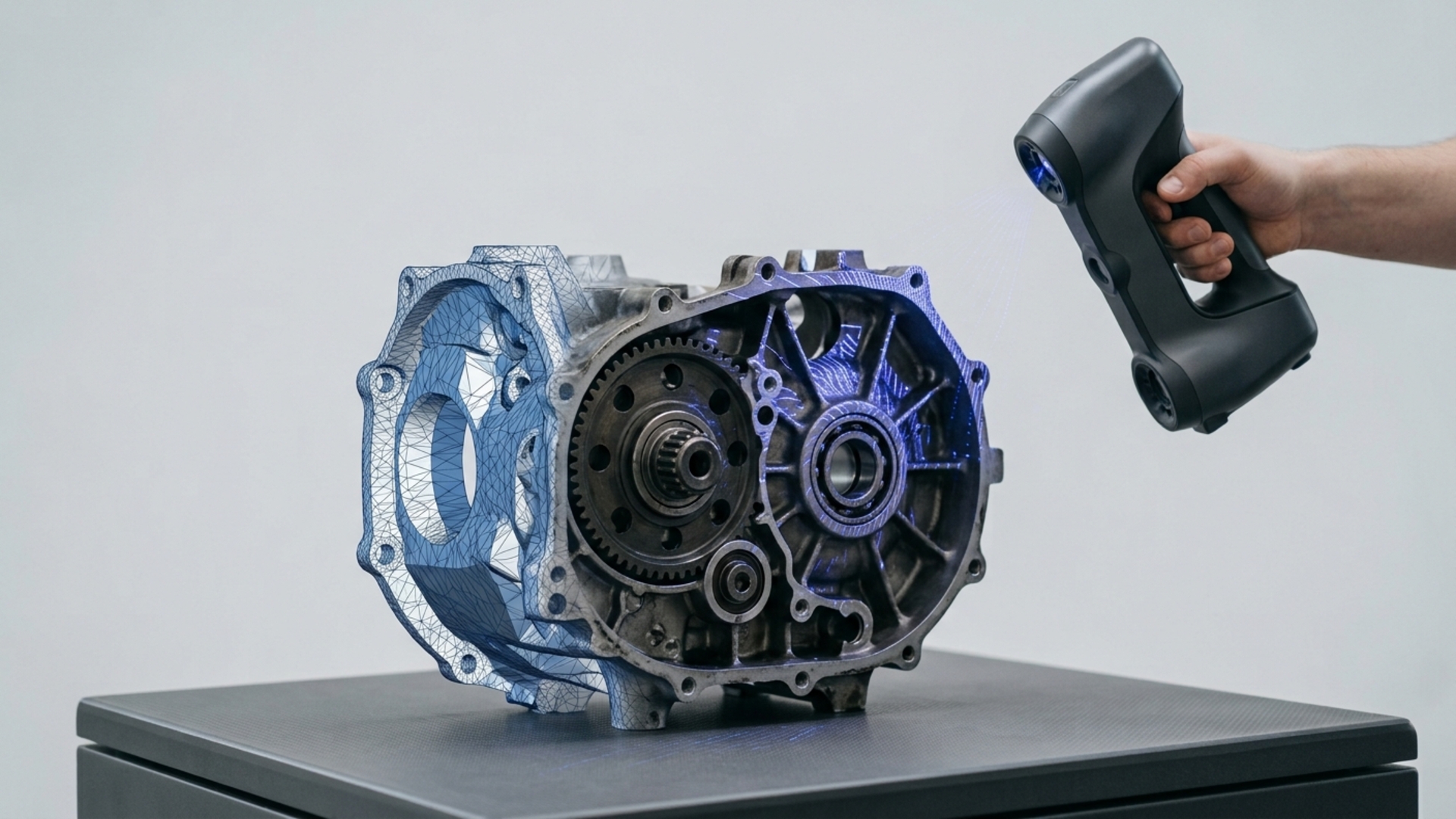
Table of Contents:
This is why rapid scan is so helpful, giving teams an option to capture physical objects and convert them into digital, usable data without going through every step of a lab scan. For businesses seeking 3D Scanning Services, rapid scanning can provide a practical way to capture physical objects efficiently.
What Is Rapid Scan?
You might be wondering what rapid scan actually is. Rapid scan is a term that describes a quick and efficient 3D capture that uses speed and portability during the process.
The scan captures the shape of a physical object using a handheld 3d scanner that gathers surface data from all sides and converts it into a digital mesh.
While speed is valuable, the end result of a rapid scan is always about getting usable data quickly enough to make an impact on the decision at hand.
That decision could be about product design, reverse engineering, visualization, inspection, 3d printing, or customer approval.
How the Process Starts
Prior to scanning, the operator determines the best capture method based on the size, material, geometry, color, reflectivity, and accessibility.
As a general rule, matte plastic is much easier to scan than chrome. Similarly, a textured prototype will provide more reliable data than a shiny injection-molded part.
Then, the operator sets up the part, taking care to ensure that there are no loose particles, excess oil, fingerprints, or other contaminants.
For many scanning applications, the required setup is minimal. The part simply needs to be set on a table, stand, or other convenient and sturdy location. In some cases, the operator does not need to place targets on the part if the device can pick up on geometry-based references.
Capturing Data
3D Scanner is ideal for rapid capture due to its intuitive design that enables fast, high-quality scans.
In addition, it has 24-bit color texture for capturing visual details.
These specifications are helpful for a variety of different products including product development, heritage parts, ergonomic mockups, castings, molded parts, packaging, design references, or other objects with a combination of geometry and color.
While the operator moves the device around the object, they see a preview of the mesh on their screen and know when they have missed a spot. Then, they capture the rest of the target area by adjusting the distance and angle as needed before completing the scan.
Cleaning and Preparing the Mesh
After scanning, the captured data typically requires some cleaning.
The operators remove unnecessary geometry, clean up rough edges, align individual scans, and fill any holes in the mesh wherever possible. This process helps to make the file much more presentable and ready for downstream uses.
It is important not to remove too much detail during this process since the reason for scanning might have been the ability to see certain imperfections in the part. If the operator was hoping to capture the effects of aging, deformation, or manual editing, those details should stay intact.
Meanwhile, for design applications, the mesh is exported as an STL, OBJ, or PLY file for 3D printing or other uses. At the same time, for engineering applications, the scan data becomes a reference for scan-to-cad modeling, metrology, or comparison to an existing CAD file.
Where Rapid Scan Saves Time
Rapid scanning is beneficial in almost every situation where teams need to incorporate real-world physical objects into digital data.
Designers can scan a handmade prototype before making changes to their CAD models. Manufacturers can scan a sample part if they do not have the file data from suppliers. Restoration services can capture damaged objects for repair, and marketing departments can scan products to create photorealistic digital assets.
It is also useful for capturing updates to a prototype in progress rather than waiting for a specific metrology session to take place. With rapid scan, teams can get a scan of the latest progress without wasting time. This makes 3D Scanning And Modeling Malaysia solutions useful for teams that need to move between physical prototypes and digital workflows efficiently.
Common Mistakes to Avoid
The first mistake that operators make is thinking that faster is better.
In some cases, a rapid scan requires just as much attention to distance, angles, lighting, and other factors. In other cases, rushing through the process creates holes in the data or unwanted noise.
Instead, operators should strive for good speed and good data rather than faster speed and lower quality.
The second mistake is trying to use the same file for multiple purposes or thinking that a mesh meant for visualization is the same as one for engineering inspection. Operators should define the end use before beginning the scanning process.
The third mistake is underestimating the importance of materials.
Clear, black, shiny, or translucent objects may need to be prepared in some way for scanning as opposed to standard-colored, matte, or textured objects. Scanning such items is not impossible but it should be treated as a special use case instead of a standard scenario.
FAQs
What Is Rapid Scan Used For?
The rapid scan process is used for capturing physical parts for design, visualization, or inspection in less time than a traditional lab scan would allow. In other words, it is a fast way to get digital data for design and engineering processes.
Is Rapid Scan 3D Accurate Enough for Engineering?
Rapid scan accuracy depends on the tools that operators use and the requirements of the part, but it can be accurate enough for engineering.
3D Scanners has a measurement accuracy of up to 0.05 mm which makes it ideal for design and development, as well as reverse engineering processes.
Does 3D Scanners Capture Color?
Yes, captures 24-bit color texture, which is why it is a good option for objects where geometry and appearance are both essential.
Do All Parts Require Targets?
No, some parts and surfaces do not need targets for scanning. It is possible to rely on texture and geometry to set up a scan. Some objects, meanwhile, present minimal information and require the operator to place scanning targets or prepare the surface for scanning.
Move From Physical Object to Digital Data Faster
Rapid scanning is best when operators know why they need the data.
If the purpose is to review the design, they need color texture. If the purpose is to perform reverse engineering, they need a scan-to-CAD file, and so on.
Dynamic 3D can help teams rapid scan option, and scan-to-CAD processes for product development, reverse engineering, and other applications. For businesses looking for Professional 3D Scanning Services In Malaysia, choosing the right scanning approach can help ensure that the captured data supports the intended application.
Conclusion
Rapid scanning provides a practical way to capture physical objects and turn them into useful digital data for design, inspection, reverse engineering, visualization, and other applications. By selecting the right scanning method and preparing the object properly, teams can achieve useful results without unnecessary delays. If you need support with scanning projects or want to explore a suitable Malaysia 3D Scanning Service, speak with our team.