
Internal Cooling Structures via Metal 3D Printing
Internal cooling structures are extremely important for modern aerospace engineering. They help in reducing overheating, stress, and weight while maximizing efficiency. Internal cooling structures can be found in gas turbine blades, combustion chambers, rocket engines, hypersonic vehicles, heat exchangers, and electronic cooling systems. Traditional manufacturing methods such as investment casting and machining are not sufficient in terms of creating complex internal channels needed for efficient cooling. Metal 3D Printing Service In Malaysia providers leverage metal additive manufacturing to build complex internal cooling structures. Metal additive manufacturing enables design freedom, reduces weight, consolidates parts, improves reliability, and reduces time to market.
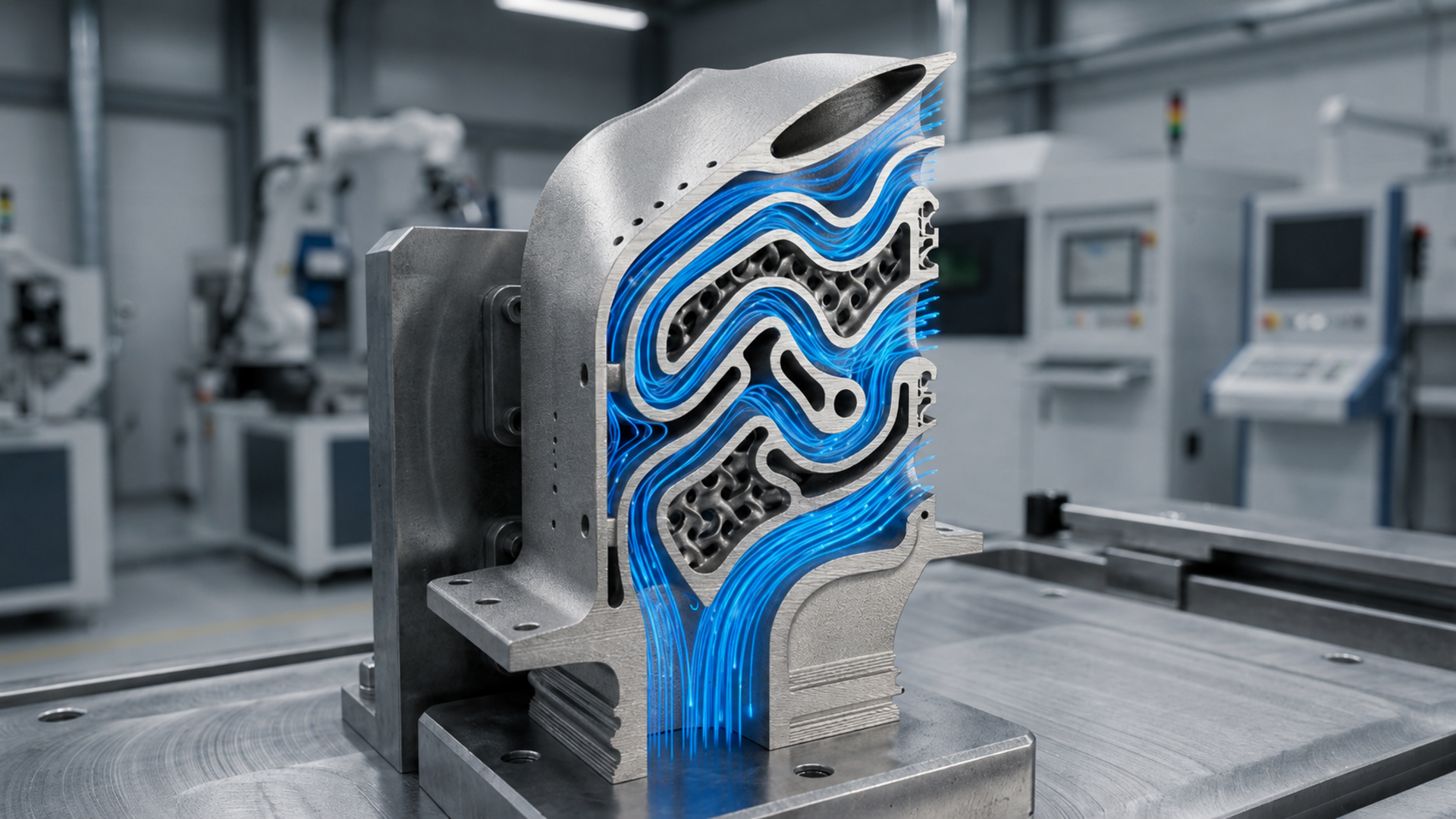
Table of Contents:
- Advantages of Metal 3D Printing for Internal Cooling Structures
- Aerospace Applications of Internal Cooling Structures
- Materials for Aerospace Cooling Applications
- Design Considerations for Metal 3D Printed Cooling Structures
- Manufacturing Challenges
- Post-Processing Requirements
- Cost and Lead Time Considerations
- Selecting an Aerospace Additive Manufacturing Partner
- Conclusion
Advantages of Metal 3D Printing for Internal Cooling Structures
Metal additive manufacturing can be used to 3D print conformal cooling channels and other complex internal cooling structures. The main advantage of metal 3D printing is that it allows for building conformal cooling channels that follow the hottest spots of the part. Engineers can add additional heat-transfer enhancing details such as turbulators, pin fins, and lattice structures to maximize the cooling efficiency. Metal additive manufacturing allows for topology optimization to reduce the amount of excess material and therefore weight.
Another advantage of metal additive manufacturing is that it allows for part consolidation. Metal 3D printing makes it possible to consolidate multiple parts into one complex part. Part consolidation reduces the number of potential failure points and the need for additional assembly steps. This, in turn, reduces the overall weight, manufacturing costs, and time required to produce the part. Metal additive manufacturing does not require tooling, which makes it possible to reduce the time-to-market. Engineers can iterate the design faster and test different cooling options to ensure maximum performance.
Aerospace Applications of Internal Cooling Structures
Metal 3D printed internal cooling structures can be found in a variety of aerospace applications.
Gas Turbine Engines
Gas turbine blades and nozzle guide vanes require complex internal cooling structures to withstand the extreme operating temperatures and ensure the maximum efficiency of the gas turbine engines.
Combustion Systems
Combustion liners and chambers require internal cooling to protect the turbine blades and vanes from the intense heat of the combustion zone.
Rocket Engines
Rocket engine thrust chambers and nozzles require regenerative cooling to withstand the extreme temperatures during flight.
Other Aerospace Applications
Internal cooling structures can also be found in hypersonic vehicles, compact aerospace heat exchangers, environmental control systems, and electronics/avionics cooling.
Materials for Aerospace Cooling Applications
There is a wide range of materials that can be used for metal additive manufacturing. The choice of materials for aerospace cooling applications depends on the operating temperatures, loads, and the required mechanical and thermal properties.
Inconel 625 (IN625)
Inconel 625 (IN625) is a nickel-based alloy that has excellent strength and creep resistance at high temperatures. It has good oxidation and corrosion resistance, making it suitable for extreme conditions. It is a high-performance material that is used in high-temperature applications such as gas turbine blades, vanes, combustion chambers, and exhaust systems. The main disadvantage of nickel-based alloys is their weight and cost. IN625 is significantly heavier and more expensive than aluminum alloys.
Aluminum Silicon Magnesium (AlSi10Mg)
Aluminum Silicon Magnesium (AlSi10Mg) is a lightweight alloy that has excellent thermal conductivity. It is suitable for moderate-temperature aerospace applications. It is a good choice for 3D Aluminium Printing of heat exchangers, electronic cooling systems, and other applications where weight is a critical factor. AlSi10Mg is relatively easy to 3D print and therefore more cost-effective than nickel-based alloys. However, it cannot withstand high temperatures.
Design Considerations for Metal 3D Printed Cooling Structures
When designing metal additive manufactured parts with internal cooling structures, engineers should follow the standard design for additive manufacturing guidelines. Cooling structures should have self-supporting geometries to reduce the need for support structures. Engineers should also make sure that the channels have sufficient thickness to ensure the mechanical integrity of the part. The channels should also have sufficient diameter to allow for proper coolant flow and removal of metal powder during the printing process.
Engineers can add additional features such as turbulators, pin fins, and lattice structures to enhance the heat transfer characteristics of the cooling channels. Computational Fluid Dynamics (CFD) and thermal simulations can be used to optimize the design of internal cooling structures.
Manufacturing Challenges
Metal additive manufacturing has several challenges that should be taken into account when designing internal cooling structures. Metal 3D printing can introduce residual stresses that can cause warping and part distortion. The surfaces of the printed parts are typically rough, which can lead to increased flow resistance. Another challenge of metal additive manufacturing is the removal of excess metal powder from the internal channels.
Challenges such as residual stresses and rough surfaces can be addressed by optimizing the printing parameters, using simulation software, and post-processing. Part distortion can be reduced by using the appropriate build orientations. Metal additive manufacturing requires additional post-processing steps such as heat treatment, machining, and surface finishing.
Post-Processing Requirements
Most additive manufactured parts require extensive post-processing before they can be used in aerospace applications.
Heat Treatment
The primary purpose of heat treatment is to reduce residual stresses caused by the additive manufacturing process. Stress relief heat treatment and HIP (Hot Isostatic Pressing) are the two main heat treatment processes used in post-processing of additive manufactured parts. Stress relief heat treatment helps to minimize the risk of warping and cracking. HIP treatment helps to remove internal defects such as pores and voids, which enhances the mechanical properties of the part.
Machining and Surface Finishing
Many additive manufactured parts require machining to achieve the required tolerances and surface finish. Internal channels may also need to be finished using specialized processes such as AFM (Abrasive Flow Machining). Surface finishing processes such as shot peening and coatings can be used to improve the surface finish, fatigue resistance, and thermal properties of the part.
Inspection
Non-destructive testing and inspection are critical steps in post-processing of additive manufactured parts. Coordinate measuring machines, CT scans, and other inspection equipment can be used to inspect the internal geometries of the part. Inspection ensures that the manufactured part meets the required specifications and quality standards.
Cost and Lead Time Considerations
The cost of additive manufactured parts is determined by a variety of factors. The main factors that affect the cost of additive manufacturing are the cost of aerospace-grade metal powders, machine time, post-processing, machining, inspection, and design optimization. Additive manufacturing can be more cost-effective than traditional manufacturing methods for complex parts. However, additive manufacturing may not be cost-effective for simple parts that can be machined or cast using traditional methods. Companies offering Aluminium 3D Printing Service In Malaysia can help manufacturers evaluate whether additive manufacturing is the most economical solution for their specific application.
Selecting an Aerospace Additive Manufacturing Partner
When selecting an additive manufacturing partner, it is important to consider their experience, equipment, materials, post-processing capabilities, inspection capabilities, and quality control processes. A reliable additive manufacturing partner should have the necessary aerospace certifications such as AS9100. The manufacturer should have experience working with aerospace materials and have a thorough understanding of design for additive manufacturing principles. The additive manufacturing partner should have the necessary equipment to 3D Printing In Metals for aerospace-grade parts. It is also important to ensure that the manufacturer can provide high-quality metal powders, post-processing, and inspection services.
Conclusion
Metal 3D printing enables the fabrication of conformal cooling structures that help in maximizing the efficiency of aerospace systems while minimizing weight and stress. Metal additive manufacturing is a promising technology that can be used to produce a wide range of aerospace parts and systems. Whether you require lightweight aluminum components or advanced aerospace cooling solutions, partnering with an experienced 3D Printing Metal Service Provider Malaysia ensures high-quality results, reliable post-processing, and efficient production. Get in touch with our team to learn how our expertise can support your next aerospace metal additive manufacturing project.