
Why 3D Printing is Becoming Essential for Engineers
3D printing technology is playing an increasingly crucial role in the engineering sector as it provides various tools and processes that enable engineers to create and manufacture products faster and more efficiently. The 3D printing process enables engineers to fabricate products they envision from a design on a computer. It entails using a 3D printer, and it works by creating products one layer at a time. This form of manufacturing is fast, and it has multiple benefits because it uses advanced technology to produce goods using different materials.
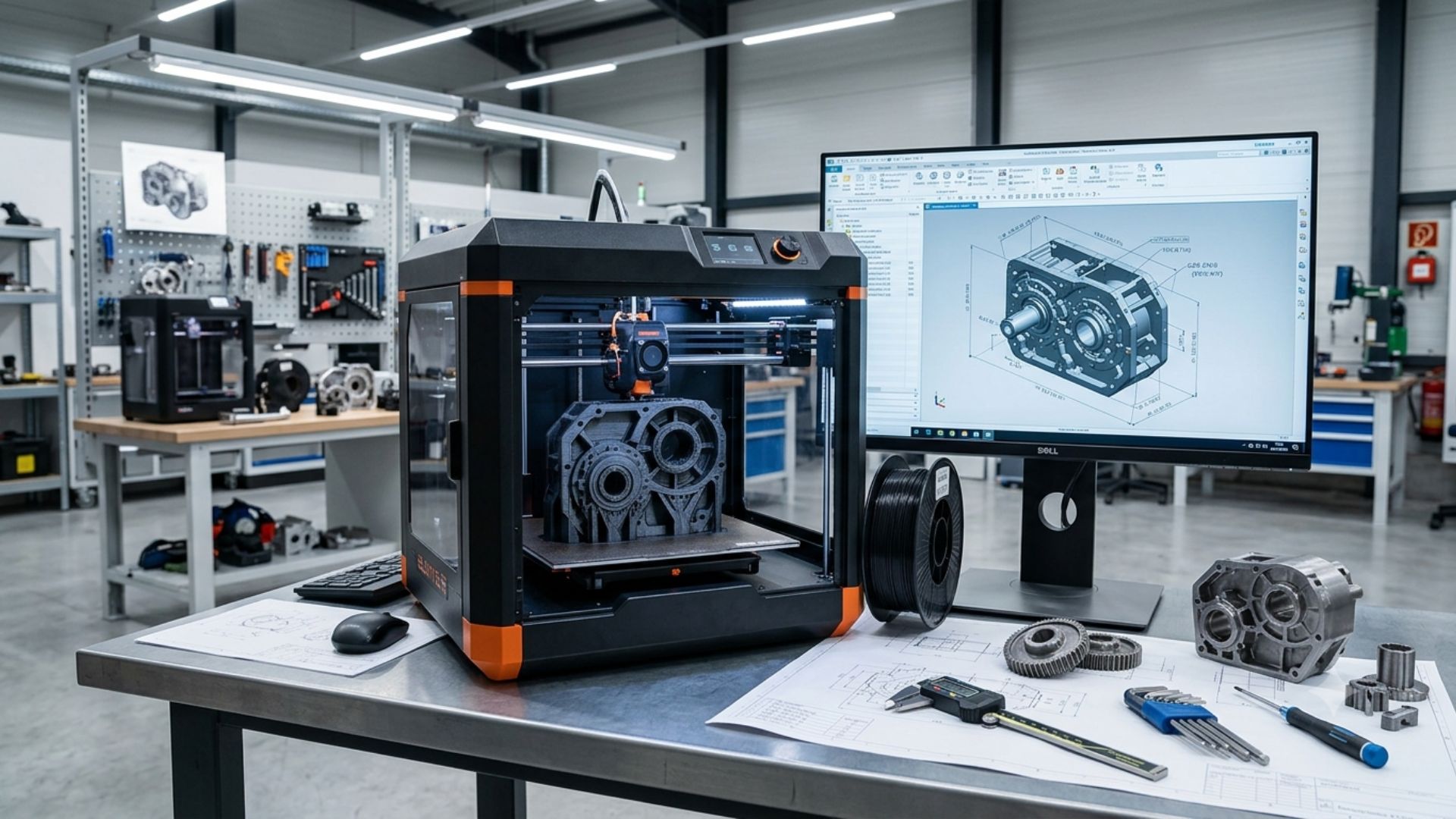
Table of Contents:
Some of the most common materials used in 3D printing include, but are not limited to, plastics and metals. It is critical to understand the basics of 3D printing to comprehend the numerous benefits it brings to engineers. This report contains key concepts of 3D printing for engineers, its advantages and application in engineering design, plus future applications and outlooks for this technology. It is essential to understand these basics to be able to utilize 3D Printing Service Malaysia for engineering processes.
Understanding the Basics of 3D Printing for the Engineer
3D printing, also referred to as additive manufacturing, works by building layers of material until it reaches the desired form. To begin with, an engineer must first design a product using computer-aided design or any other form of design software to come up with the desired computer model they want to print. Thereafter, the design is converted into an STL file, and this file is used in preparing the printer to print the product. This process is advantageous to an engineer because they can create complex designs with ease and produce functional parts with high precision. The STL file also facilitates slicing the design into thinner layers, enabling an engineer to have more control over the printing process. A number of materials can be utilized in 3D printing, including plastic, metals, and resin. Each of these materials has its advantages and challenges, and it is essential to understand them before choosing which material to use in the printing process. 3D printing also uses different 3D printing technologies which include fused deposition modeling, stereolithography, and selective laser sintering.
Advantages of 3D Printing in Engineering Design
3D printing technology is advantageous to engineers in many ways, including rapid prototyping, customization of products, decreased material waste during the production process, and reduced cost of production. In rapid prototyping, an engineer can first create and print a model of a product or use the prototype to test the final product. It is vital for an engineer to understand rapid prototyping to meet changing customer needs and bring successful products to the market faster.
It is also customary for an engineer to customize a product according to their needs and requirements. 3D Printing Service In Malaysia enables engineers to do so with ease. They can utilize this method to produce customized products, including medical devices and automobile parts required to serve specific functions.
This technology is also essential in engineering design because it reduces the amount of waste produced during the production process. It is designed to minimize excess material, thus conserving resources and reducing the cost of production. Engineers can also utilize 3D printing to replace multiple parts with one printed component, thus making the overall design stronger and more robust. This technology is, therefore, critical in engineering design because it reduces material waste, making production economically feasible.
Application of 3D Printing in Different Engineering Fields
3D printing technology is being utilized in different engineering fields to come up with solutions to various problems in the following areas:
Aerospace Engineering
3D printing is utilized to produce lightweight yet strong parts required in the aerospace industry. These parts enable airplanes and other aircraft to carry more weight and fly at faster speeds.
Automobile Engineering
Automobile engineers utilize 3D printing technology in two different ways: rapid prototyping and the production of production parts. Rapid prototyping enables car manufacturers to develop prototypes of various car models required to determine the most appropriate design for production. Automobile engineers can also utilize 3D printing to produce custom parts for specific automotive needs, for instance, in Formula One racing.
Medical Engineering
Besides building prototypes and other production parts, engineers can also utilize 3D printing to produce custom-made implants and prosthetics. 3D Printing Products Malaysia can also include patient-specific medical devices created using additive manufacturing. It is also possible to print models of organs for research and surgical planning. Engineers can use biocompatible materials for these devices to ensure they are safe for the human body.
Future Outlook on 3D Printing
In the near future, 3D printing is expected to become more sophisticated. For instance, engineers expect to print with more materials, and the use of smart materials is anticipated to increase. Smart materials, also referred to as sensitive materials, respond to changes in their environment, such as temperature and pressure. These materials will enable engineers to print more innovative goods and products that can also adapt to the environment.
It is also expected that engineers will utilize multi-material 3D printing to produce products that were previously inaccessible using single-material printing. They will also use this technology to produce goods with embedded sensors and electronics, offering more applications such as making printed parts responsive to external stimuli.
The 3D printing industry is also expected to develop more sustainable materials and processes. This will be essential to ensure ecological responsibility in the future. Overall, this technology will become increasingly essential to engineers because of its numerous advantages. It will enable engineers to print various products with ease and make engineering processes more efficient. Furthermore, the growing adoption of 3D Printing in Education will help future engineers gain practical experience with additive manufacturing technologies before entering the workforce.
Conclusion
3D printing technology is increasingly being utilized in different engineering fields because of its numerous advantages. Some of the benefits of 3D printing include rapid prototyping, product customization, reduced material waste during production, and lower manufacturing costs. The application of 3D printing ranges from the production of customized medical devices to the manufacture of automobile parts and aircraft components. It is essential for engineers to understand these applications and advantages of 3D printing technology to make their processes more efficient. It is predicted that this technology will continue to advance in the future, offering even more advantages to engineers. They should, therefore, consider adopting this technology to remain competitive in their respective fields.
For a broader range of engineering solutions, innovative designs, and professional 3D Printing Company In Malaysia services, Connect with our team today to discover how additive manufacturing can support your next engineering project.